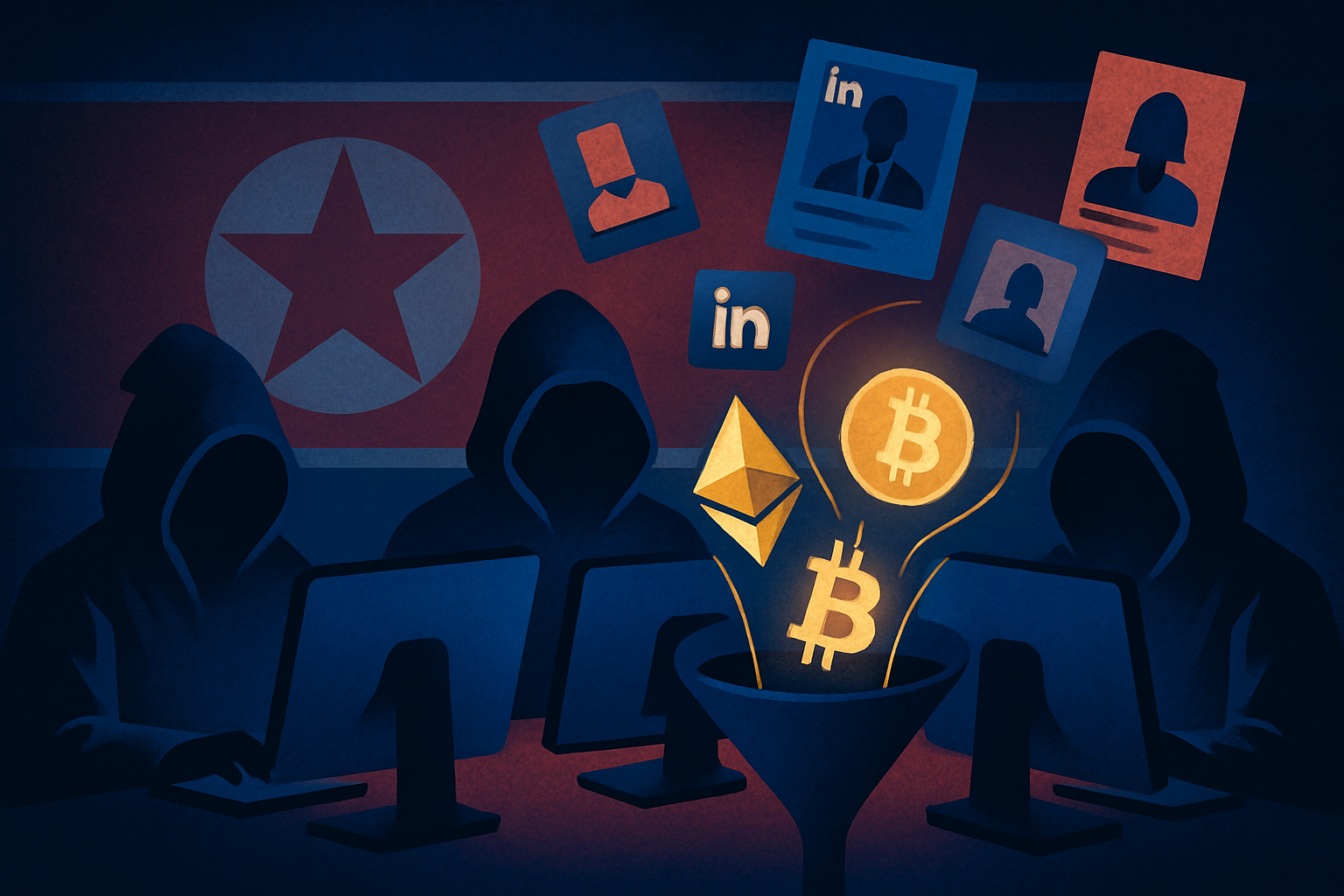
On March 1, 2026, cryptocurrency gift card and payments platform Bitrefill became the latest victim of what it describes as a sophisticated, state-sponsored cyberattack. In a detailed incident report published on X (formerly Twitter) on March 17, the Stockholm-founded company pointed the finger squarely at North Korea’s Lazarus Group — the same hacking collective responsible for the record-breaking $1.5 billion Bybit heist just weeks earlier.
The attackers compromised an employee’s laptop, extracted legacy production credentials, drained cryptocurrency from Bitrefill’s hot wallets, exploited gift card supply chains, and accessed approximately 18,500 customer purchase records. While Bitrefill has not disclosed the total financial loss, the company confirmed it would absorb all losses from operational capital and that services have since been fully restored.
For an industry still reeling from the Bybit catastrophe, the Bitrefill breach is a sobering reminder: no crypto company — regardless of size, profitability, or years of clean operation — is safe from Pyongyang’s cyber army.
What Is Bitrefill?
Before diving into the anatomy of the attack, it’s important to understand what Bitrefill does and why it matters in the crypto ecosystem.
Founded in 2014 by Michael Grünberger, Michel Gustavsson, and Sergej Kotliar, Bitrefill is a crypto e-commerce platform that allows users to spend Bitcoin, Ethereum, Tether, Dogecoin, and other cryptocurrencies on real-world products and services. The platform’s core offerings include:
- Digital gift cards for thousands of brands across retail, gaming, food, entertainment, and more
- Mobile airtime refills covering 170+ countries
- Bill payment services in select markets
- Lightning Network integration for near-instant Bitcoin payments
Bitrefill has been a pioneer in the “live on crypto” movement, providing a bridge between digital assets and everyday commerce. With an API serving over 1,600 products in 170 countries, the platform operates at significant scale — managing dozens of suppliers, thousands of SKUs, and multiple cryptocurrency payment rails simultaneously.
Crucially, Bitrefill has operated as a crypto-native business with minimal KYC (Know Your Customer) requirements. The platform stores limited personal data and outsources any mandatory identity verification to external providers. This privacy-focused model has made Bitrefill popular among crypto enthusiasts who value financial sovereignty — but it also means the data that was exposed carries particular significance for a user base that prioritizes anonymity.
For over a decade, Bitrefill operated without a major security incident. That streak ended on March 1, 2026.
The Attack: How It Unfolded
Initial Compromise: A Single Laptop
Like so many devastating cyberattacks in the cryptocurrency industry, the Bitrefill breach began with a single point of failure: a compromised employee laptop.
According to Bitrefill’s incident report, the attackers gained access to an employee’s device and extracted what the company described as “legacy credentials.” These were older production secrets that, critically, still had the power to unlock access to Bitrefill’s broader infrastructure.
This initial vector is hauntingly familiar. The $1.5 billion Bybit hack in February 2025 similarly began when a Safe{Wallet} developer’s laptop was compromised, giving the Lazarus Group a foothold into one of the world’s largest crypto exchanges. The $625 million Ronin Network hack in 2022 was initiated through a fake LinkedIn job offer that targeted a single senior engineer.
The pattern is clear: North Korean hackers don’t need to find zero-day exploits in blockchain protocols. They target the humans operating them.
Escalation: From Credentials to Full Access
Once inside the employee’s laptop, the attackers extracted credentials tied to production systems. These weren’t just read-only access tokens — they provided the keys to escalate access across Bitrefill’s infrastructure, including:
- Parts of the internal database containing customer purchase records
- Cryptocurrency hot wallets holding operational funds
- Gift card inventory and supply chain systems used to procure products from vendors
The use of a “legacy credential” suggests that older access keys may not have been properly rotated or decommissioned — a common vulnerability in fast-growing tech companies where infrastructure evolves faster than security hygiene.
The Theft: Hot Wallets Drained, Supply Chains Exploited
With production-level access secured, the attackers moved quickly on two fronts.
Hot Wallet Drainage: The hackers transferred cryptocurrency funds from Bitrefill’s hot wallets to addresses under their control. Hot wallets — which are connected to the internet for operational liquidity — are inherently more vulnerable than cold storage solutions. Bitrefill has not disclosed how much cryptocurrency was stolen, but confirmed the losses would be covered from operational capital, suggesting a significant but not existential sum.
Gift Card Supply Chain Exploitation: In a more unusual attack vector, the hackers also manipulated Bitrefill’s gift card purchasing systems. The company detected suspicious purchasing patterns among certain suppliers, indicating that the attackers were exploiting inventory and supply flows — essentially using Bitrefill’s own supplier relationships to make fraudulent purchases. This approach demonstrates a sophisticated understanding of Bitrefill’s business model and represents a form of theft that goes beyond simple crypto wallet drainage.
Detection and Containment
Bitrefill first noticed the breach through anomalous supplier purchasing patterns — not through traditional security alerts. The irregular activity triggered internal alarms that led the company to investigate further, at which point the hot wallet drainage was also discovered.
Once the full scope of the breach became apparent, Bitrefill made the difficult decision to take its entire platform offline.
“Bitrefill operates a global e-commerce business with dozens of suppliers, thousands of products, and multiple payment methods across many countries,” the company explained. “Safely switching all these things off and bringing them back online is not trivial.”
The company engaged external cybersecurity firms including zeroShadow, SEAL911, and RecoverisTeam, alongside on-chain analysts and law enforcement, to investigate the breach and assist with recovery.
Customer Data Exposure: What Was Compromised
The 18,500 Purchase Records
While the cryptocurrency theft grabbed headlines, the data exposure aspect of the breach raises equally serious concerns — particularly for a platform whose users value privacy.
The attackers accessed approximately 18,500 purchase records containing:
- Email addresses used for order notifications and delivery
- Cryptocurrency payment addresses (Bitcoin, Ethereum, and other blockchain addresses used to pay for purchases)
- Metadata including IP addresses associated with transactions
The 1,000 Encrypted Names
Within that 18,500-record subset, approximately 1,000 records contained customer names in encrypted format. These names were collected for specific products that required them (likely certain gift cards or mobile top-ups that require recipient identification).
While the names were encrypted, Bitrefill is treating them as potentially compromised. The reason: the attackers may have accessed the encryption keys along with the data, rendering the encryption moot. Affected customers in this category have been notified directly by email.
What Wasn’t Compromised
Bitrefill emphasized several important limitations of the breach:
- No full database exfiltration: The company’s logs indicate the attackers ran a limited number of queries, consistent with probing for cryptocurrency and gift card inventory rather than attempting to download the entire database.
- No KYC data stored internally: Any know-your-customer verification data is held by external providers, not within Bitrefill’s systems.
- Customer data was likely not the primary target: Analysis of the attackers’ query patterns suggests they were primarily motivated by financial theft — cryptocurrency and gift card inventory — rather than data harvesting.
Real-World Implications for Affected Customers
Despite Bitrefill’s assurances, the exposed data creates tangible risks for affected users:
Phishing attacks: Email addresses combined with knowledge of Bitrefill usage make affected customers prime targets for sophisticated phishing campaigns. Attackers could impersonate Bitrefill, referencing real transactions, to trick users into revealing wallet seed phrases or other sensitive credentials.
Blockchain analysis and deanonymization: Exposed cryptocurrency payment addresses, combined with email addresses and IP metadata, could allow sophisticated actors to link on-chain activity to real-world identities. For privacy-conscious crypto users, this represents a serious degradation of their pseudonymity.
Targeted social engineering: The combination of email, IP data, and purchasing patterns gives threat actors enough information to craft convincing social engineering attacks — not just related to Bitrefill, but potentially targeting the users’ broader cryptocurrency holdings.
Bitrefill has stated that it does not currently believe customers need to take specific action, but advises “caution regarding any unexpected communications related to Bitrefill or cryptocurrency.” Given the Lazarus Group’s track record, that caution should extend well beyond Bitrefill-related communications.
Why Lazarus Group? The Attribution Evidence
Bitrefill attributed the attack to the Lazarus Group (also known as BlueNoroff in its financially-focused operations) based on multiple indicators:
Malware Signatures
The malware deployed on the compromised employee laptop matched known tools and techniques used in previous Lazarus Group operations. North Korean hackers maintain sophisticated custom malware suites that have been extensively documented by cybersecurity researchers.
On-Chain Patterns
The movement of stolen cryptocurrency from Bitrefill’s hot wallets to attacker-controlled addresses followed on-chain patterns consistent with Lazarus Group laundering operations. The group has well-documented methods for obscuring stolen funds through chain-hopping, mixing services, and layered transactions.
Infrastructure Reuse
The attackers reused IP addresses and email accounts that have been previously linked to Lazarus Group operations. State-sponsored hacking groups sometimes reuse infrastructure across campaigns, providing forensic breadcrumbs for attribution.
Tactical Consistency
The overall attack methodology — targeting an employee device, extracting credentials, escalating to production systems, draining hot wallets — is consistent with the Lazarus Group’s established playbook, which has been refined across dozens of crypto heists over the past decade.
While attribution in cybersecurity is never 100% certain, the convergence of these indicators, combined with independent confirmation from firms like zeroShadow and SEAL911, makes the Lazarus Group attribution highly credible.
The Lazarus Group: A Brief History of Crypto Carnage
To understand the Bitrefill hack in context, it’s essential to appreciate the scale and sophistication of the Lazarus Group’s operations. This is not a ragtag band of hackers — it’s a state-sponsored cyber warfare unit that has stolen an estimated $6 billion or more in cryptocurrency, making it the single most prolific financial threat actor in the digital asset space.
Key Lazarus Group Crypto Heists
| Date | Target | Amount Stolen | Method |
|---|---|---|---|
| Feb 2025 | Bybit | $1.5 billion | Compromised Safe{Wallet} developer laptop; manipulated cold wallet transfer |
| Jul 2024 | WazirX | $235 million | Exploited multisig wallet infrastructure |
| Jun 2023 | Atomic Wallet | $100 million | Supply chain attack on desktop wallet |
| Jun 2022 | Harmony Horizon Bridge | $100 million | Compromised private keys of bridge multisig |
| Mar 2022 | Ronin Network | $625 million | Fake LinkedIn job offer to Axie Infinity engineer |
| 2020 | KuCoin | $275 million | Hot wallet private key compromise |
These are just the largest confirmed operations. According to Chainalysis, North Korea-linked groups were responsible for over $2 billion in crypto thefts in 2025 alone, and the cumulative total across 2017–2025 exceeds $6 billion.
The Bybit Hack: Context for Bitrefill
The Bitrefill attack came just weeks after the Lazarus Group executed its most audacious operation yet: the $1.5 billion theft from Bybit on February 21, 2025.
In that attack, the group compromised a developer working on Safe{Wallet}, the multi-signature wallet infrastructure used by Bybit for cold storage. The attackers manipulated the signing interface so that when Bybit’s team authorized what appeared to be a routine transfer, they were actually signing a transaction that sent 401,347 ETH to attacker-controlled addresses.
The FBI publicly attributed the Bybit hack to North Korea in a formal Public Service Announcement, and blockchain investigator ZachXBT traced the funds through a complex web of intermediary addresses and mixing services. As of early 2026, authorities had recovered only a fraction of the stolen funds.
The Bybit hack was a watershed moment for the crypto industry — proof that even the most security-conscious exchanges could be compromised through human-element attacks. The Bitrefill hack, following the same playbook just days later, suggests the Lazarus Group is operating at an accelerated tempo.
How North Korea Uses Stolen Crypto
The stolen cryptocurrency isn’t used for personal enrichment — it’s a strategic asset for the North Korean regime. According to multiple intelligence assessments from the United States, South Korea, and the United Nations:
- Weapons program funding: Stolen crypto directly funds North Korea’s nuclear weapons and ballistic missile programs. A 2024 UN report estimated that crypto theft accounted for up to 40% of the country’s weapons of mass destruction funding.
- Sanctions evasion: Cryptocurrency allows North Korea to bypass international financial sanctions that have cut it off from the traditional banking system.
- Operational funding: The regime uses stolen funds to sustain its cyber operations, creating a self-funding cycle where successful hacks finance future attacks.
The Bitrefill hack, even if the stolen amount is relatively modest compared to Bybit, contributes to this broader apparatus of state-sponsored financial crime.
Bitrefill’s Response and Recovery
Immediate Actions
Following the breach, Bitrefill took several immediate steps:
- Full system shutdown: All platforms were taken offline to contain the breach
- External incident response: Engaged zeroShadow, SEAL911, RecoverisTeam, and law enforcement
- Customer notification: Directly emailed the ~1,000 users whose encrypted names may have been compromised
- On-chain forensics: Worked with blockchain analysts to trace stolen funds
Security Improvements
Bitrefill outlined a comprehensive security enhancement program including:
- External penetration testing: Comprehensive security audits by independent experts
- Access control tightening: Revoking legacy credentials and implementing stricter internal access policies
- Enhanced monitoring: Improved logging and real-time threat detection capabilities
- Incident response refinement: Updated automated shutdown protocols and response procedures
Financial Impact
While the total amount of cryptocurrency stolen remains undisclosed, Bitrefill emphasized that the company is “well-funded and profitable” and capable of absorbing the operational losses. The company confirmed it will cover all losses from operational capital — meaning customers will not bear any financial impact from the breach.
Most services, including payments, gift card inventory, and customer accounts, have been restored, with sales volumes returning to normal levels.
“Getting hit by a sophisticated attack sucks (a lot),” the company said in its statement. “But we survived. We will continue to do our best to continue deserving our customers’ trust.”
Broader Implications for the Crypto Industry
The Employee Laptop Problem
The Bitrefill hack reinforces what has become the crypto industry’s most persistent vulnerability: the human element. The most sophisticated smart contract audits, the most robust blockchain protocols, the most advanced encryption — all of it becomes irrelevant when an attacker can compromise a single employee laptop and extract valid production credentials.
This is not a new problem, but the Lazarus Group has elevated it to an art form. Their approach is methodical:
- Target identification: Identify employees at crypto companies through LinkedIn, GitHub, and social media
- Social engineering: Deploy fake job offers, malicious documents, or supply chain attacks to compromise devices
- Credential extraction: Harvest production secrets, API keys, and wallet access credentials
- Rapid exploitation: Move quickly to drain wallets and exfiltrate valuable data before detection
The solution requires a fundamental shift in how crypto companies approach operational security — from treating it as a technical problem to recognizing it as a human systems problem.
Legacy Credentials: A Ticking Time Bomb
Bitrefill’s mention of “legacy credentials” points to a widespread issue across the tech industry. As companies grow and evolve, old access keys, API tokens, and credentials accumulate. Rotating these credentials is operationally disruptive, so it often falls to the bottom of the priority list.
The Lazarus Group knows this. Their attacks frequently exploit credentials that should have been retired long ago. For crypto companies specifically, where a single leaked key can result in the complete drainage of a wallet, credential hygiene isn’t a best practice — it’s an existential requirement.
The Evolving Target Landscape
The Bitrefill attack also signals an evolution in the Lazarus Group’s targeting strategy. Previous high-profile attacks focused on exchanges (Bybit, WazirX, KuCoin), blockchain bridges (Ronin, Harmony), and wallet providers (Atomic Wallet). Bitrefill represents a different category: a crypto services company.
Bitrefill is not an exchange or a DeFi protocol — it’s an e-commerce platform. The attack on its gift card supply chains suggests the Lazarus Group is expanding its playbook to exploit the business logic of crypto-adjacent services, not just their wallets.
This broadening of targets should put every company in the cryptocurrency ecosystem on notice — from payment processors and custody providers to analytics firms and NFT marketplaces. If your business touches cryptocurrency, you’re a potential Lazarus Group target.
Regulatory Implications
The string of major hacks attributed to North Korean actors — Bybit ($1.5B), WazirX ($235M), and now Bitrefill — is intensifying calls for stricter cybersecurity standards in the cryptocurrency industry.
While the industry has historically resisted heavy-handed regulation, the reality is that state-sponsored hackers exploiting crypto platforms to fund nuclear weapons programs creates a compelling case for mandatory security frameworks. Potential regulatory responses include:
- Mandatory breach reporting requirements with specific timelines
- Minimum cybersecurity standards for companies handling cryptocurrency
- Regular third-party security audits as a licensing requirement
- Enhanced KYC/AML requirements that could clash with privacy-focused platforms like Bitrefill
The tension between the crypto industry’s privacy ethos and the security imperatives created by state-sponsored threats will be one of the defining policy debates of 2026.
What Affected Customers Should Do
While Bitrefill has stated that customers do not need to take specific action, security best practices suggest the following steps for anyone who has used Bitrefill:
Immediate Actions
-
Be vigilant about phishing: Expect sophisticated phishing emails that may reference your Bitrefill activity. Never click links in unsolicited emails claiming to be from Bitrefill or any other crypto service.
-
Rotate cryptocurrency addresses: If you used specific wallet addresses for Bitrefill purchases, consider migrating funds to fresh addresses to break the on-chain link between your exposed data and your current holdings.
-
Review email security: If your Bitrefill email address is also used for exchange accounts or wallet services, enable two-factor authentication (preferably hardware-based) on all associated accounts.
-
Monitor for unusual activity: Watch for unauthorized access attempts on any accounts associated with your exposed email address.
Long-Term Precautions
-
Use dedicated email addresses: For future crypto transactions, consider using unique email addresses for each platform to limit the blast radius of any single breach.
-
VPN usage: Since IP addresses were exposed, consider using a VPN for all cryptocurrency-related activity to prevent future breaches from correlating your IP with your crypto usage.
-
Hardware wallet security: Ensure your primary cryptocurrency holdings are stored in hardware wallets with strong PIN protection. The exposed data could be used for targeted social engineering attacks designed to trick you into revealing seed phrases.
The Road Ahead
The Bitrefill hack is not an isolated incident — it’s part of a pattern that is accelerating. The Lazarus Group conducted more crypto heists in 2025 than any previous year, and 2026 is already shaping up to surpass it. The group’s techniques are becoming more refined, their targets more diverse, and their operational tempo more aggressive.
For Bitrefill, the breach represents a painful but survivable blow. The company’s transparency in publishing a detailed incident report — naming the suspected attacker, describing the attack vector, and acknowledging the data exposure — sets a positive example for an industry that has often tried to minimize or obscure security incidents.
For the broader crypto industry, the message is stark: the Lazarus Group is not slowing down. They have stolen billions, they have perfected their attack playbook, and they are expanding to new target categories. Every company in the cryptocurrency ecosystem needs to ask itself a simple question: If the Lazarus Group targeted us tomorrow with a compromised employee laptop, would our defenses hold?
For most companies, the honest answer is no. And that should terrify everyone.
This article is for informational purposes only and does not constitute financial or security advice. If you believe you are affected by the Bitrefill breach, follow the company’s official communications and consider consulting a cybersecurity professional.