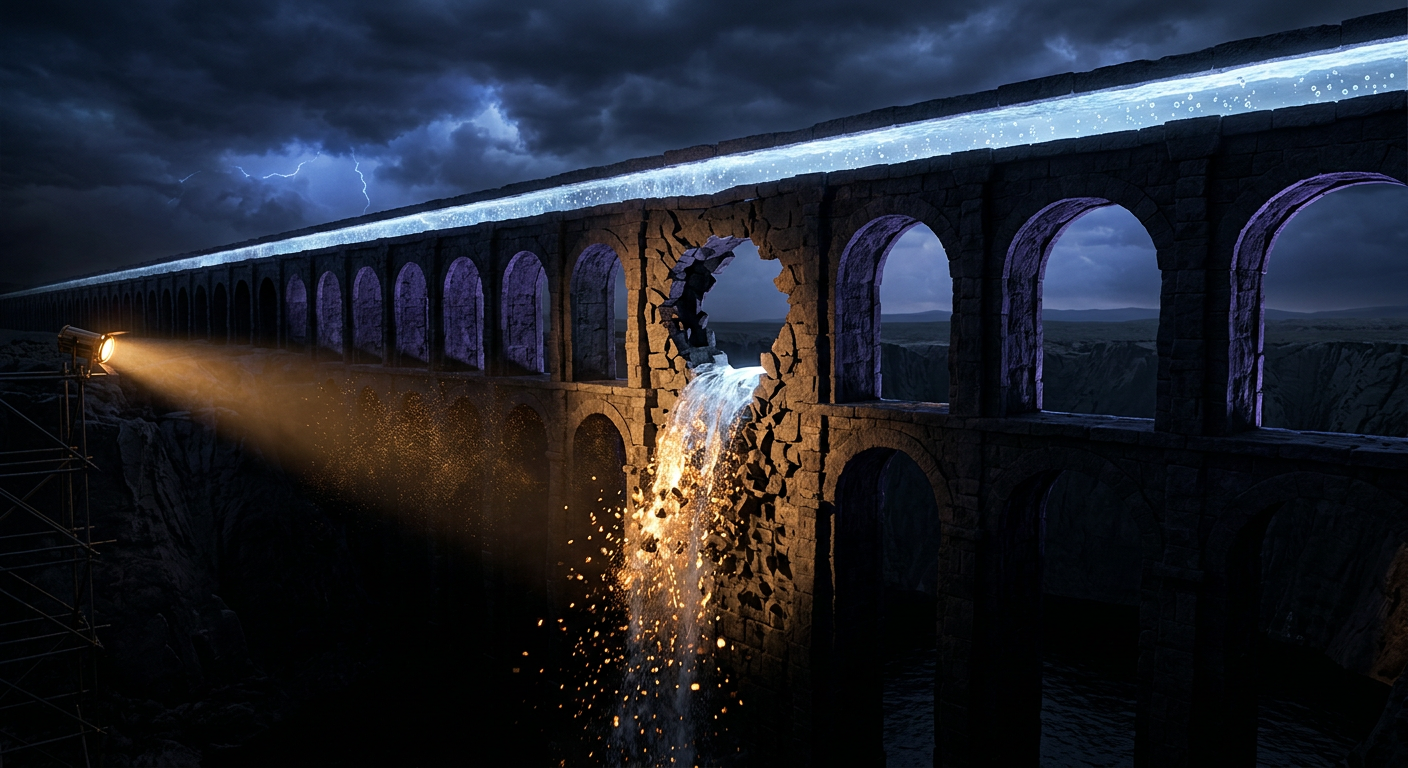
If there’s one lesson 2026 has hammered home, it’s that the most sophisticated cryptography in web3 doesn’t matter if the bridge underneath it fails. On June 18, that lesson landed on one of the most cryptographically advanced projects in the space.
Aztec Network — a privacy-focused zero-knowledge rollup built on Ethereum — suffered an exploit resulting in more than $2 million in stolen crypto assets, carried out through its Private Rollup Bridge infrastructure. The system designed to make transactions private couldn’t make its bridge invulnerable. And that’s the whole story of web3 security this year, compressed into a single incident.
What Happened
Aztec is not a typical DeFi protocol. It’s a zero-knowledge (ZK) rollup whose entire design philosophy centers on privacy — using advanced cryptography to let users transact without exposing the details on a public ledger. In a world where most blockchain activity is fully transparent, Aztec is part of the small set of systems trying to give users financial privacy without sacrificing the security of Ethereum settlement.
On June 18, 2026, attackers exploited the Aztec Private Rollup Bridge — the infrastructure that connects the rollup to Ethereum — and made off with over $2 million. The core ZK machinery that makes Aztec Aztec wasn’t what gave way. The bridge was.
Why Even ZK Rollups Break at the Bridge
This is the part worth sitting with, because it’s counterintuitive. How does a project built on some of the most rigorous cryptography in the industry lose funds?
The answer is that a rollup’s security and its bridge’s security are not the same thing. A rollup can have mathematically sound proofs, airtight privacy guarantees, and a flawless execution layer — and still rely on a bridge contract that holds the actual escrowed assets and authorizes withdrawals back to Ethereum. That bridge is where the real funds sit, and it’s a separate piece of software with its own assumptions, its own logic, and its own potential flaws.
Every rollup, no matter how advanced, faces this structural reality: the bridge is the escrow and withdrawal chokepoint, and it is repeatedly the single point of failure even when the chain’s core cryptography is sound. Attackers understand this. They don’t try to break the ZK proofs — that’s the hardest possible path. They go after the bridge, because that’s where the money is and where the assumptions are most likely to crack.
It’s the same dynamic that has driven cross-chain bridge losses all year. Aztec just demonstrated that being a privacy ZK-rollup buys you no exemption.
The 2026 Pattern, Confirmed Again
Place the Aztec exploit against the year’s backdrop and it stops looking like an anomaly.
In 2026 to date, more than $840 million has been drained across 50-plus incidents — roughly a 70% increase year-over-year. Two trends define those losses:
- Bridges dominate. Cross-chain and rollup bridges have accounted for a disproportionate share of the damage, because they concentrate liquidity behind complex verification logic and trust assumptions.
- Account and key compromise has overtaken code exploits. For the first time, compromised accounts and stolen keys account for more than 50% of DeFi attacks by incident count, surpassing classic smart-contract bugs.
The Aztec incident sits right in that intersection: a bridge failure on an otherwise advanced system, adding another modest-but-telling entry to a year defined by exactly these failure modes.
Privacy’s Double Edge
There’s a wrinkle unique to privacy systems that’s worth naming. The same features that protect legitimate users can complicate the response to an attack.
Privacy and ZK systems add cryptographic complexity, and complexity expands the attack surface — there are simply more moving parts that have to be correct. And once funds are stolen, privacy features can complicate incident response and fund tracing, making it harder for investigators and the protocol to follow the money the way they might on a fully transparent chain.
This is the genuine tension at the heart of privacy tech: the properties that make it valuable to users are, in the aftermath of a breach, the same properties that can slow recovery. It’s not an argument against privacy — financial privacy is a legitimate and important goal — but it is a reason privacy systems must hold their bridge and escrow layers to an especially high standard.
Practical Takeaways
For anyone using rollups and bridges, the Aztec incident reinforces a few durable habits:
- Don’t conflate a rollup’s reputation with its bridge’s safety. A respected, cryptographically sound chain can still have a vulnerable bridge. Evaluate the bridge as its own risk.
- Minimize standing exposure in bridge and escrow contracts. Move assets across when you have a reason to; don’t leave large balances parked in bridge infrastructure.
- Prefer well-audited, battle-tested bridges, and weight independent security review of the bridge layer heavily in your decisions.
- For builders: treat the bridge as the crown-jewel attack surface it is — relentless adversarial review of withdrawal and verification logic, conservative trust assumptions, monitoring, and rate limits.
The State of Web3 Security, Mid-June 2026
As the first half of 2026 closes, the picture is sobering but clear. Losses are up sharply year-over-year, bridges remain the favorite target, and attackers are increasingly winning through compromised keys and accounts rather than exotic code exploits. The Aztec exploit — small in dollar terms, instructive in shape — is a fitting bookend: even the most cryptographically advanced corners of web3 are only as secure as the bridges that connect them.
The defense isn’t more clever cryptography. It’s discipline at the boundaries — the bridges, the keys, and the people — where 2026’s attackers keep finding their way in.
This article is for informational purposes only and is not security or investment advice.